
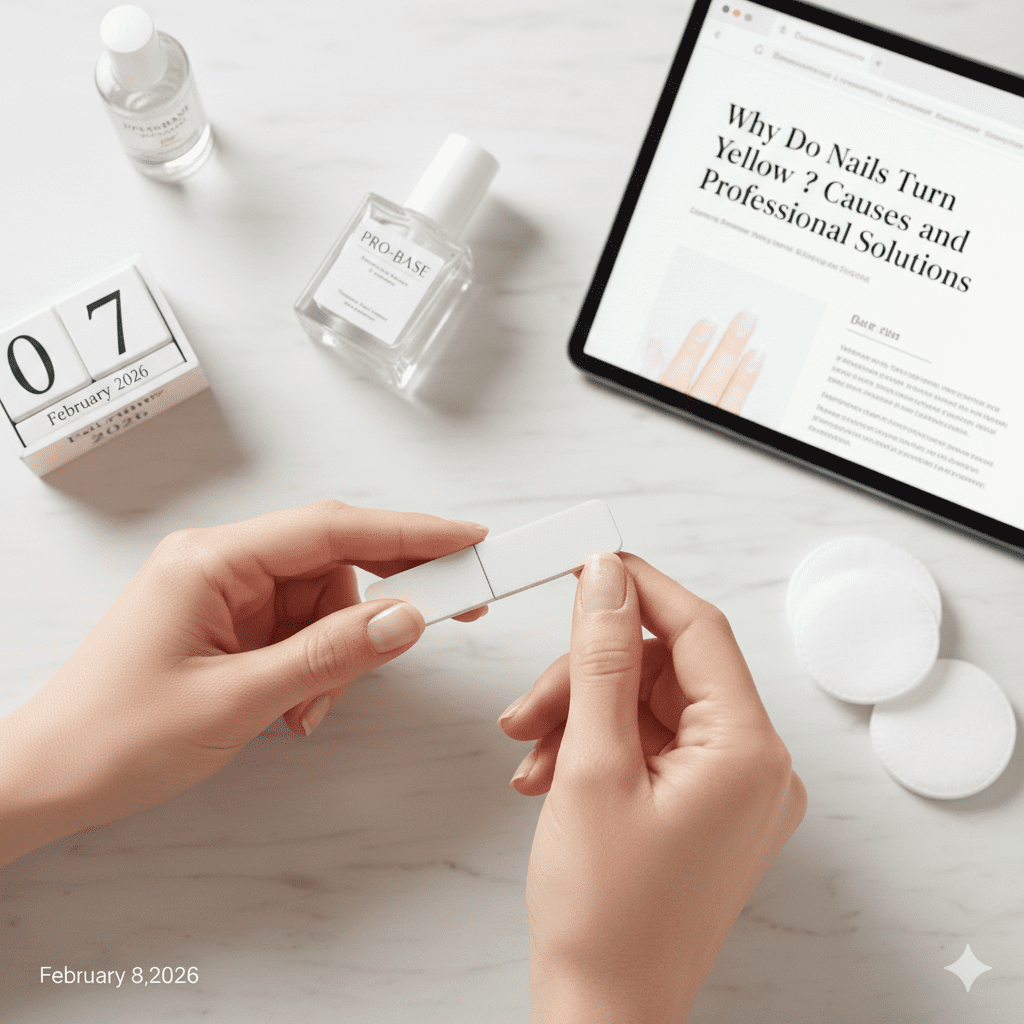

If you’ve ever removed your nail polish and thought, “Why do my nails look stained?”—you’re not alone. In my 10 years as a professional nail technician, I’ve seen countless clients panic over yellow nails, often assuming the worst. The good news? Most yellowing has very specific, fixable causes—and very few are permanent.
Let’s break down why nails turn yellow, what your nails are trying to tell you, and the professional-grade solutions I actually use in the salon.
Why Do Nails Turn Yellow? A Professional Overview
Yellow nails are not just a cosmetic issue. They’re often a signal—from your habits, your products, or occasionally your health.
From my experience, over 80% of yellow nail cases I see are caused by lifestyle or nail-care mistakes, not medical problems.
The Most Common Causes of Yellow Nails
1. Nail Polish Staining (The #1 Culprit)
Dark, bold, or neon nail polishes—especially reds, blues, and oranges—contain strong pigments that seep into the nail plate.
Why it happens:
- Skipping a base coat
- Wearing polish continuously for weeks
- Low-quality or expired polish
What I see in clients:
Yellowing is usually worse at the tips and fades near the cuticle.
2. Gel and Acrylic Overuse
Gel and acrylic nails don’t automatically cause yellowing—but improper application and removal absolutely do.
Professional insight:
The real damage comes from:
- Over-buffing the natural nail
- Acetone overexposure
- UV/LED heat damage
Repeated sets without breaks thin the nail, making stains more visible.
3. Smoking and Nicotine Exposure
Nicotine stains nails the same way it stains teeth and fingers.
Key signs:
- Uneven yellow-brown discoloration
- More intense on dominant hand
- Often paired with dry cuticles
This type of yellowing penetrates deeper and takes longer to fade.
4. Fungal Nail Infections (When Yellow Is a Warning)
Not all yellow nails are harmless.
Red flags I watch for:
- Yellow with thickness or crumbling
- Nail lifting from the bed
- A dull, cloudy appearance
If you notice these, skip DIY fixes and see a dermatologist or podiatrist.
5. Aging and Natural Nail Changes
As we age, nails grow slower and become more porous, which means they absorb stains more easily.
This isn’t something to “fix,” but it does mean nail care needs to be more intentional.
6. Underlying Health Conditions (Less Common, But Important)
In rare cases, yellow nails may be linked to:
- Thyroid disorders
- Diabetes
- Yellow Nail Syndrome (very rare)
If yellowing appears suddenly without polish use, get it checked.
Step-by-Step: How to Remove Yellow Nail Stains Safely
This is the exact method I recommend to clients, not harsh internet hacks.
Step 1: Gentle Surface Clean
- Remove all polish
- Wash hands with a mild soap
- Dry thoroughly
Step 2: Whitening Soak (2–3 Times Weekly)
- Mix:
- 1 tablespoon baking soda
- A few drops of hydrogen peroxide (3%)
- 1 tablespoon baking soda
- Apply as a paste
- Leave on for 2–3 minutes max
⚠️ Do not scrub aggressively.
Step 3: Hydrate Immediately
- Apply cuticle oil
- Follow with a nail-strengthening cream
Consistency matters more than intensity.
Pro Tip: How I Prevent Yellow Nails in the Salon
Pro Tip: I always use a ridge-filling, slightly tinted base coat for clients who wear dark polish often. It acts like a stain-blocker and visually brightens the nail instantly.
This one step prevents 90% of polish-related yellowing.
Common Mistakes to Avoid (These Make Yellow Nails Worse)
- ❌ Using lemon juice daily (too acidic)
- ❌ Over-buffing to “remove” stains
- ❌ Applying polish on dry, dehydrated nails
- ❌ Wearing gel or acrylics back-to-back without breaks
- ❌ Ignoring early signs of fungal infection
If your nails feel thinner after whitening, stop immediately.
Professional Solutions That Actually Work
1. Nail Brightening Treatments
Salon-grade nail brighteners contain optical whiteners—not bleach—making nails look healthy instantly.
2. Keratin or Biotin Nail Rehab
These treatments rebuild the nail plate so stains fade faster over time.
3. Medical Antifungal Treatment (If Needed)
Over-the-counter products rarely work for real fungal infections. Prescription treatment is often necessary.
How to Prevent Yellow Nails Long-Term
Daily Habits That Make a Difference
- Use a base coat every single time
- Moisturize nails like skin
- Take polish breaks every 6–8 weeks
- Wear gloves for cleaning
Weekly Nail Care Routine
- Light buffing (once weekly max)
- Cuticle oil every night
- Strengthener instead of polish during breaks
Healthy nails resist staining naturally.
When Yellow Nails Are NOT a Nail-Care Issue
Seek professional help if:
- Yellowing spreads rapidly
- Nails thicken or detach
- There’s pain or odor
- You haven’t worn polish in months
Trust me—early treatment saves nails.
Final Thought From a Nail Professional
Yellow nails are usually your nails asking for better care, not punishment. With the right approach, most discoloration fades within a few weeks—and your nails come back stronger than before.
Have you noticed your yellowing happens after polish, gel, or seemingly out of nowhere? Tell me—your answer can reveal the real cause faster than you think.
Disclaimer: I am a professional nail technician, not a medical doctor. The information in this article is for educational purposes and is not a substitute for professional medical diagnosis or treatment. Always consult a healthcare provider for persistent or painful nail changes.”