
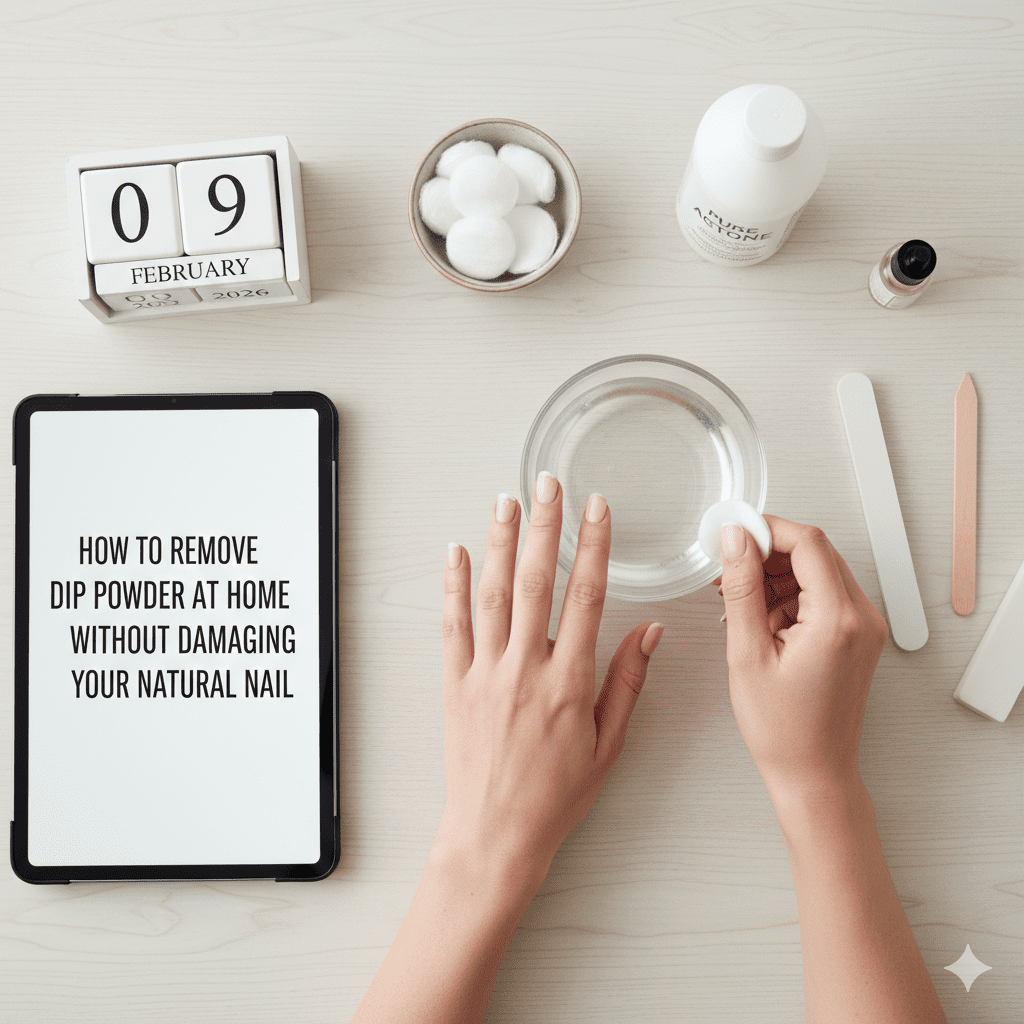

If you’ve ever peeled, popped, or forced off dip powder, you already know the damage it can cause. I’ve seen many clients come into my chair with paper-thin, peeling nails simply because they rushed removal at home.
In these cold February months, acetone can make your fingertips feel freezing during the soak. The ‘Warm Water Bowl’ method isn’t just for speed it keeps your hands comfortable and prevents the cuticles from becoming brittle due to the cold.
The truth is, you can remove dip powder nails at home safely but only if you respect the structure of the product and your natural nail underneath.
Why Dip Powder Is Harder to Remove Than Gel
Dip powder is layered differently than gel polish.
Instead of curing in a lamp, dip powder is built with:
- Resin-based adhesive
- Pigmented powder layers
- A hard, sealed top coat
This creates a thicker, more rigid coating, which is why improper removal causes surface nail trauma.
What Actually Damages Your Natural Nails (It’s Not Acetone)
Many people blame acetone but that’s not the real problem.
What really causes damage:
- Peeling or lifting dip manually
- Over-filing the natural nail
- Rushing the soak-off process
Acetone temporarily dries nails, but physical force permanently weakens them.
Tools You Need to Remove Dip Powder Nails at Home (Budget-Friendly)
You don’t need a drill or salon kit.
What I recommend to clients:
- 100% acetone
- Nail file (180 grit)
- Buffer (240 grit)
- Cotton balls or pads
- Aluminum foil or reusable soak-off clips
- Cuticle pusher (wooden preferred)
Optional but helpful:
- Small bowl
- Warm water
- Cuticle oil
Step-by-Step: How to Remove Dip Powder Nails at Home Safely
Step 1: File Down the Top Layers (Do Not Skip This)
This step determines how long removal takes.
What to do:
- File off the shiny top coat completely
- Thin the dip layers, but stop before hitting natural nail
Pro Rule:
If the nail looks matte and slightly chalky, you’re done.
Step 2: Use the “Warm Acetone” Method (Salon Trick)
Heat speeds up breakdown not force.
How to do it safely:
- Fill a bowl with warm (not hot) water
- Place a smaller bowl of acetone inside
- Let acetone warm for 2–3 minutes
Warm acetone dissolves dip faster without extra filing.
Step 3: Soak Properly (Timing Matters)
Soaking too short leads to scraping. Too long leads to dryness.
Correct method:
- Soak cotton with acetone
- Place on nail
- Wrap with foil or clip
- Wait 15–20 minutes
Don’t check every 5 minutes that resets the process.
Step 4: Gently Push, Don’t Scrape
After soaking, dip powder should look swollen or flaky.
Use a wooden cuticle pusher to:
- Gently push loosened product
- Work from cuticle to tip
- Stop if you feel resistance
If it doesn’t move easily, rewrap and soak longer.
Step 5: Repeat Only Where Necessary
Professionals never force stubborn spots.
- Re-soak only the nails that need it
- Never dig into remaining product
Patience here saves weeks of nail recovery later.
Pro Tips I Use in the Salon (Rarely Shared Online)
Pro Tip #1: Acetone + Paper Towel Trick
Paper towel has more texture than cotton.
- Soaks acetone better
- Breaks down dip faster
- Reduces soaking time by 5–7 minutes
Pro Tip #2: One Final Buffer Pass Only
After removal:
- Use a 240-grit buffer
- Lightly smooth residue
- Stop as soon as the nail feels even
Shiny nails are healthy nails, not ultra-matte ones.
Common Mistakes to Avoid When Removing Dip Powder
These are the top reasons nails get ruined:
- Peeling dip off “just one corner”
- Filing aggressively to speed things up
- Using metal tools to scrape
- Skipping cuticle oil afterward
- Reapplying dip immediately to damaged nails
If it hurts, you’re doing it wrong.
How to Restore Nails After Dip Powder Removal
Removal is only half the process.
What I recommend for the next 7 days:
- Daily cuticle oil (2x/day if possible)
- No hardeners for at least 48 hours
- Keep nails short and softly shaped
- Avoid re-dipping immediately
Healthy nails hold product better next time.
Can You Remove Dip Powder Without Acetone?
Short answer: Not effectively.
Non-acetone removers:
- Take much longer
- Encourage scraping
- Increase nail damage
If you’re sensitive to acetone, reduce exposure time and don’t replace it.
How Often Should You Remove Dip Powder?
From a professional standpoint:
- Every 3–4 weeks max
- Never back-to-back for months
- Always assess nail health first
Dip powder is strong and your nails need breaks.
Final Thought From a Nail Tech
Learning how to remove dip powder nails at home safely is one of the best things you can do for long-term nail health. Slow, gentle removal will always outperform shortcuts.
Your nails should feel smooth, flexible, and intact when you’re done not thin or sore.
💬 What’s your biggest struggle with dip powder removal soaking time, leftover residue, or post-removal damage?