
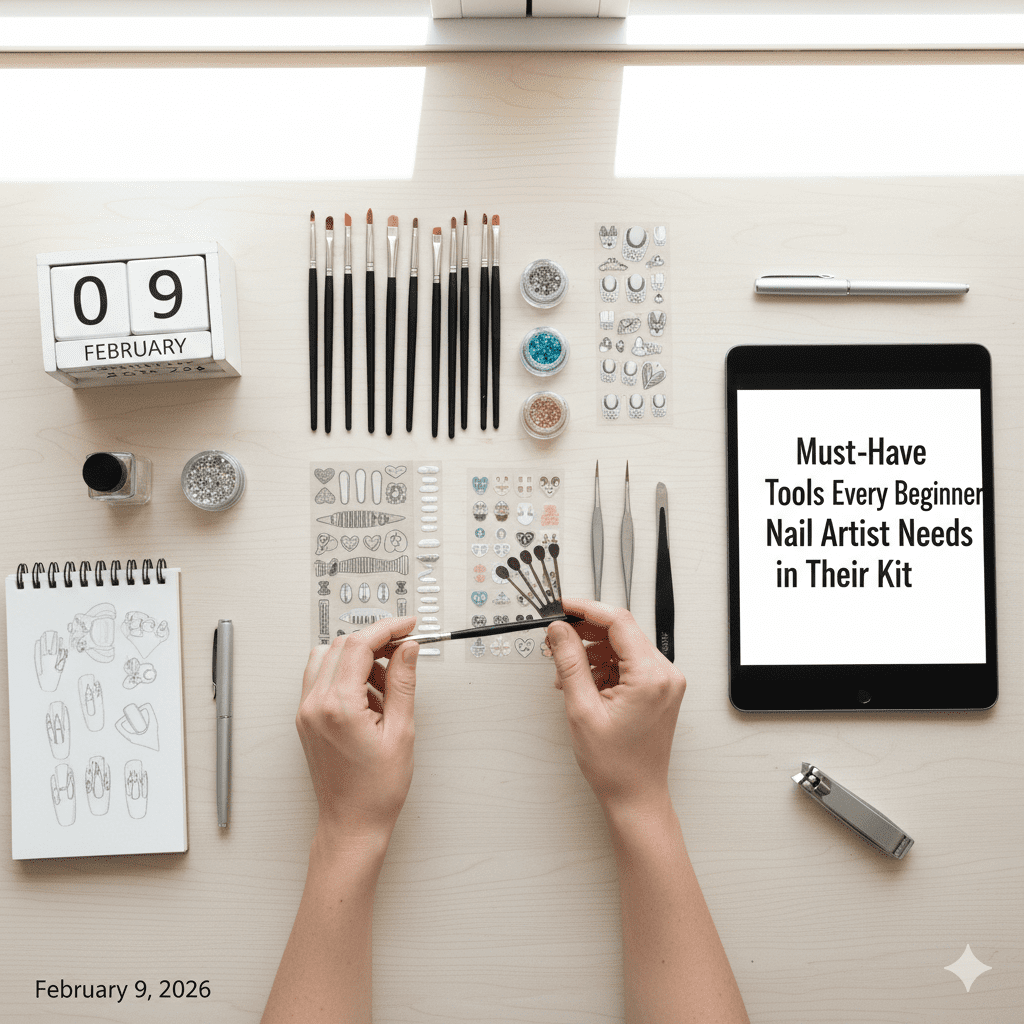

You walk into a beauty supply store, ready to build your first nail art kit. An hour later, you’re standing at checkout with $300 worth of tools you saw on TikTok, half of which you don’t know how to use. Two weeks from now, most will sit untouched in a drawer while you scroll through Instagram wondering why your nails still don’t look like the tutorials.
I’ve trained dozens of new nail techs who fell into this exact trap. They’d show up with kits packed with specialty brushes they’d never touch and missing the three tools they’d use daily. The problem isn’t buying tools—it’s buying the wrong tools first.
After a decade working in salons and watching what beginners actually use versus what influencers sell them, I’ve identified exactly seven tools you need to start. Not seventy. Seven.
Why Most Beginner Kits Set You Up to Fail
Walk into any beauty store and you’ll see “complete” nail art kits with 40+ pieces. Sounds great until you realize 30 of those pieces require skills you won’t develop for months.
The biggest issue: these kits prioritize quantity over quality. A set with twelve brushes sounds impressive until every brush sheds bristles into your polish. One professional-quality brush beats ten cheap ones that frustrate you into quitting.
Here’s what professionals know: mastery comes from repetition with the right tool, not from owning every tool. You need to use the same dotting tool fifty times before you understand pressure control. Switching between five different dotters just confuses your muscle memory.
The “Three Uses Minimum” Rule
Before buying any tool, ask yourself: “Can I create three different designs with this?”
This rule prevents impulse purchases of single-use tools that clutter your kit. A dotting tool creates dots, florals, and gradient effects—three uses minimum. A specialty cat-eye magnet? One use. Wait on that until you’ve mastered basics.
I use this rule with new techs in training. If they can’t name three immediate applications for a tool, we skip it.
The Essential Seven: Tools That Actually Get Used
1. Glass Nail File (180-240 Grit)
Price range: $8-15
Why it matters: Metal files damage nail layers; glass files seal the edge
Every nail art design starts with proper nail prep. Glass files create smooth edges without the microscopic tearing that metal files cause. Those tiny tears? They’re why your polish chips within two days.
The 180-240 grit range works for natural nails. Lower numbers (100-150) are too aggressive for beginners and can thin your nail plate. Higher numbers (400+) are for buffing, not shaping.
Glass files work in one direction. Sawing back and forth creates heat friction that damages nails. File from corner to center in smooth, single strokes.
Pro tip: Wash your glass file with soap and water after every use. Nail dust embedded in the surface makes filing less effective and can harbor bacteria.
2. Dual-Sided Dotting Tool Set
Price range: $6-12 for a 5-piece set
Why it matters: Creates professional designs without artistic skill
Dotting tools are beginner miracle workers. You can create complex-looking designs using only dots—no brush control required. Different sized tips let you layer dots for dimension.
Buy a set with at least three different sizes. The smallest creates delicate details and tiny centers for flowers. The largest makes bold polka dots and base layers for dimensional designs.
The double-ended design gives you ten different sizes in five tools. This variety is crucial when you’re learning what size creates which effect.
Usage secret: For crisp dots, apply them to completely dry base color. For watercolor blending effects, dot into wet polish. Both techniques are valid—they just create different aesthetics.
3. Angled Cleanup Brush
Price range: $8-15
Why it matters: Fixes mistakes and creates clean edges
This brush saves more manicures than any other tool. The angled cut lets you clean polish from cuticles and sidewalls with precision. Without it, you’re using cotton swabs that leave fuzz and create messy edges.
Look for synthetic bristles, not natural hair. Synthetic holds up better to acetone and maintains its shape longer. The ideal angle is 45 degrees—steep enough for precision, not so steep you can’t get a clean swipe.
Keep this brush in acetone or nail polish remover while you work. The constant saturation prevents polish from drying on bristles.
Critical detail: Replace this brush every 3-4 months. Acetone degrades bristles over time, making the edge less precise. A frayed cleanup brush creates more problems than it solves.
4. Base Coat and Top Coat System
Price range: $10-20 for both
Why it matters: Protects nails and extends polish life by 5-7 days
Skipping base and top coat is the number one reason beginner manicures fail. Base coat prevents staining and creates adhesion. Top coat seals your design and prevents chips.
Buy these as a matched system from the same brand. Different formulations don’t always play nicely together. I’ve seen top coats wrinkle base coats from competing brands, ruining hours of work.
For gel polish, this is non-negotiable. Gel base and top must be from the same product line or you’ll get peeling within 24 hours.
Application rule: Thin coats always. Base coat should be thin enough you can see your nail through it. Same with top coat. Thick coats take forever to dry and create a gummy texture that dents when you touch things.
5. Detail Liner Brush (15-20mm)
Price range: $10-18
Why it matters: Creates clean lines without tape
Liner brushes have long, thin bristles designed for straight lines and fine details. The 15-20mm length gives you enough bristle to maintain a straight line across the entire nail in one stroke.
These brushes require practice. Your first attempts will be wobbly. That’s normal. The long bristles actually help stabilize shaky hands because the length absorbs minor tremors.
Use liner brushes for French tips, geometric designs, striping, and outlining. One smooth motion creates better lines than short, choppy strokes.
Technique tip: Load the brush evenly with polish, then gently press and drag. Don’t “paint” with it like a regular brush. The pressure-and-drag motion keeps the line consistent.
6. Cuticle Pusher and Nipper Set
Price range: $12-20
Why it matters: Creates a clean canvas for polish
Cuticle work isn’t glamorous, but it’s essential. Overgrown cuticles make even perfect polish application look messy. Proper cuticle work extends the visible nail bed, making designs look more professional.
The pusher should be metal with a slightly rounded edge—not sharp. Sharp edges damage the nail plate. Use gentle pressure in small circular motions to push back cuticles.
Nippers are for hangnails and dead cuticle tissue only. Never cut living cuticle. Cutting live cuticle causes infection risk and makes cuticles grow back thicker.
Safety first: Disinfect these tools after every use with barbicide or alcohol. Cuticle tools touch living tissue and can spread bacteria or fungus if not properly sanitized.
7. LED/UV Lamp (If Using Gel)
Price range: $25-60
Why it matters: Gel won’t cure without proper light
If you’re working with gel polish, a lamp isn’t optional. Regular nail polish air-dries; gel requires UV or LED light to harden. Without it, gel stays wet indefinitely.
Look for 24W minimum for LED lamps. Lower wattage works but takes longer to cure. Anything over 48W is overkill for beginners and costs more without meaningful benefits.
Timer settings matter. Good lamps have 30-second, 60-second, and 90-second options. Different gel brands cure at different speeds, so adjustable timers give you flexibility.
Size check: Your lamp needs to fit all five fingers comfortably. Lamps that require you to cure thumb separately are annoying and slow down your process.
Common Mistakes That Waste Money and Time
Mistake #1: Buying Kits Instead of Individual Tools
Pre-packaged kits seem economical. They’re often false economy.
Most kits include one or two quality tools and fill the rest with cheap substitutes to inflate piece count. You’d pay less buying the seven essential tools individually at professional quality than buying a 50-piece kit of junk.
I’ve never seen a beginner use more than 10 tools from those massive kits. The other 40 collect dust.
Mistake #2: Choosing Cheap Brushes
Brushes are the one area where quality makes or breaks results.
Cheap brushes shed bristles into your polish. They lose their shape after three uses. The ferrule (metal part) loosens and bristles fall out mid-design. You save $5 and ruin a $20 manicure when a rogue bristle gets sealed under top coat.
Professional brushes cost more upfront but last years with proper care. Budget $10-20 per brush instead of $3.
Mistake #3: Skipping Proper Storage
Tools left loose in a drawer get damaged. Brush tips bend. Glass files chip. Dotting tools get sticky residue buildup.
Invest in a basic tool case or organizer. Brushes need individual slots to protect bristles. Files need sleeves. This extends tool life significantly.
I use a simple plastic organizer with compartments from any craft store. Nothing fancy, just protected storage.
Mistake #4: Not Cleaning Tools Between Uses
Dried polish on tools affects their performance.
Dotting tools with polish buildup create rough, uneven dots. Brushes with dried gel in bristles lose flexibility. Files with nail dust embedded provide less control.
Clean tools immediately after use. For brushes, swish in acetone and wipe clean. For dotting tools, wipe with acetone-soaked lint-free pad. For files, wash with soap and water.
Time investment: Cleaning takes two minutes. Replacing tools costs money and shopping time.
Mistake #5: Buying Trendy Tools Before Mastering Basics
Chrome powders, cat-eye magnets, stamping plates—these are all fun. They’re also advanced techniques that require foundation skills first.
Master basic polish application, cleanup, and simple designs before investing in specialty effects. Otherwise you’re frustrated trying to use advanced tools without the fundamental skills they require.
The temptation is real when you see gorgeous results online. Remember: those artists spent months or years developing skills before attempting those looks.
Step-by-Step: Building Your First Kit on a Budget
Total investment: $60-100
Timeline: Buy tools as you master each one
Skill level: Complete beginner
Step 1: Start With Prep Tools (Week 1) – $25-35
Buy glass file, cuticle pusher, and cleanup brush first. Spend your first week practicing proper nail prep. Perfect shaping, cuticle work, and cleanup technique.
These are the foundations everything else builds on. Skip this step and your art sits on unprepared nails that chip within days.
Step 2: Add Polish System (Week 2) – $15-25
Choose either regular polish or gel—not both yet. Buy quality base coat, top coat, and 2-3 color shades you’ll actually wear.
Practice application technique. Thin coats. Proper cleanup. Letting coats dry fully between layers. This builds muscle memory.
Step 3: Introduce Basic Art Tools (Week 3) – $10-20
Add dotting tools to your kit. Spend a week creating dot-based designs. Practice pressure control. Learn how different sizes create different effects.
By now you’ve got weeks of practice with fundamentals. Art tools make sense because you understand how to prep and apply base colors properly.
Step 4: Expand to Line Work (Week 4) – $10-18
Buy a liner brush. Practice straight lines, curves, French tips. This is harder than dotting and benefits from your previous practice.
Don’t rush this. Line work takes time to develop. Your first attempts will look rough. That’s expected.
Step 5: Add Gel Lamp If Desired (Month 2) – $25-60
Once you’ve mastered regular polish technique, consider moving to gel. Buy a basic LED lamp and gel base/top system.
Gel requires everything you learned with regular polish, plus understanding cure times and removal. Build on existing skills rather than learning everything simultaneously.
Pro Tips From the Salon Floor
The “Rest Your Pinky” technique: When using any brush or dotting tool, rest your pinky finger on the nail table or on your other hand. This anchors your hand and reduces shake. It’s the single biggest improvement beginners can make to precision work.
Brush maintenance extends life: After cleaning brushes, reshape bristles with your fingers while still damp. Store brushes flat or hanging tip-down until completely dry. Never store wet brushes tip-up—water travels into the ferrule and loosens the glue holding bristles.
Buy backup cleanup brushes: These wear out fastest because they live in acetone. Having a backup means you’re never caught mid-manicure with a degraded brush.
Test new tools on practice wheels first: Nail practice wheels (cheap plastic finger models) let you test techniques without wasting your actual manicure. Practice pressure, angle, and motion before applying to your nails.
Lighting matters more than you think: Work in bright, even lighting. Desk lamps with daylight bulbs (5000K-6500K) show true colors and help you spot mistakes immediately. Poor lighting causes color mismatches and missed spots during cleanup.
What About Stamping Plates and Stencils?
These are wonderful tools—for month three or four, not week one.
Stamping requires coordination between several tools: plate, stamper, scraper, and polish. Each step needs technique. Trying to learn stamping while still mastering basic polish application overwhelms most beginners.
Stencils and striping tape seem easier but require understanding of how to work with wet polish without smudging. This comes after you’ve developed patience for dry times.
Save these for when basic skills feel natural. You’ll learn them faster with foundation techniques already developed.
Making Your Investment Last
Quality tools properly maintained last years. I still use some brushes I bought eight years ago.
Store tools in a climate-controlled environment. Extreme heat or cold affects brush adhesive and can damage tool handles. Don’t leave your kit in a car or garage.
Replace tools when they stop performing, not on a schedule. A glass file that’s chipped needs replacement. A brush with perfect bristles can last indefinitely.
Invest in quality once rather than buying cheap tools multiple times. The budget math favors quality. A $15 brush used 200 times costs $0.08 per use. A $3 brush that breaks after 10 uses costs $0.30 per use.
Your First Kit Checklist
Copy this list to your phone before shopping:
- Glass nail file (180-240 grit) – $8-15
- Dual-sided dotting tool set (5 pieces) – $6-12
- Angled cleanup brush – $8-15
- Base coat and top coat (matched system) – $10-20
- Detail liner brush (15-20mm) – $10-18
- Cuticle pusher and nipper – $12-20
- LED lamp if using gel – $25-60 (optional for regular polish)
Total: $54-100 for regular polish, $79-160 if including gel
This covers everything you need for the first six months of practice. Don’t buy more until you’ve used these tools enough to identify what you genuinely need next.
The goal isn’t building the biggest kit. The goal is building skills with tools you actually use.
What’s the first design you’ll try once you’ve built your essential kit?