
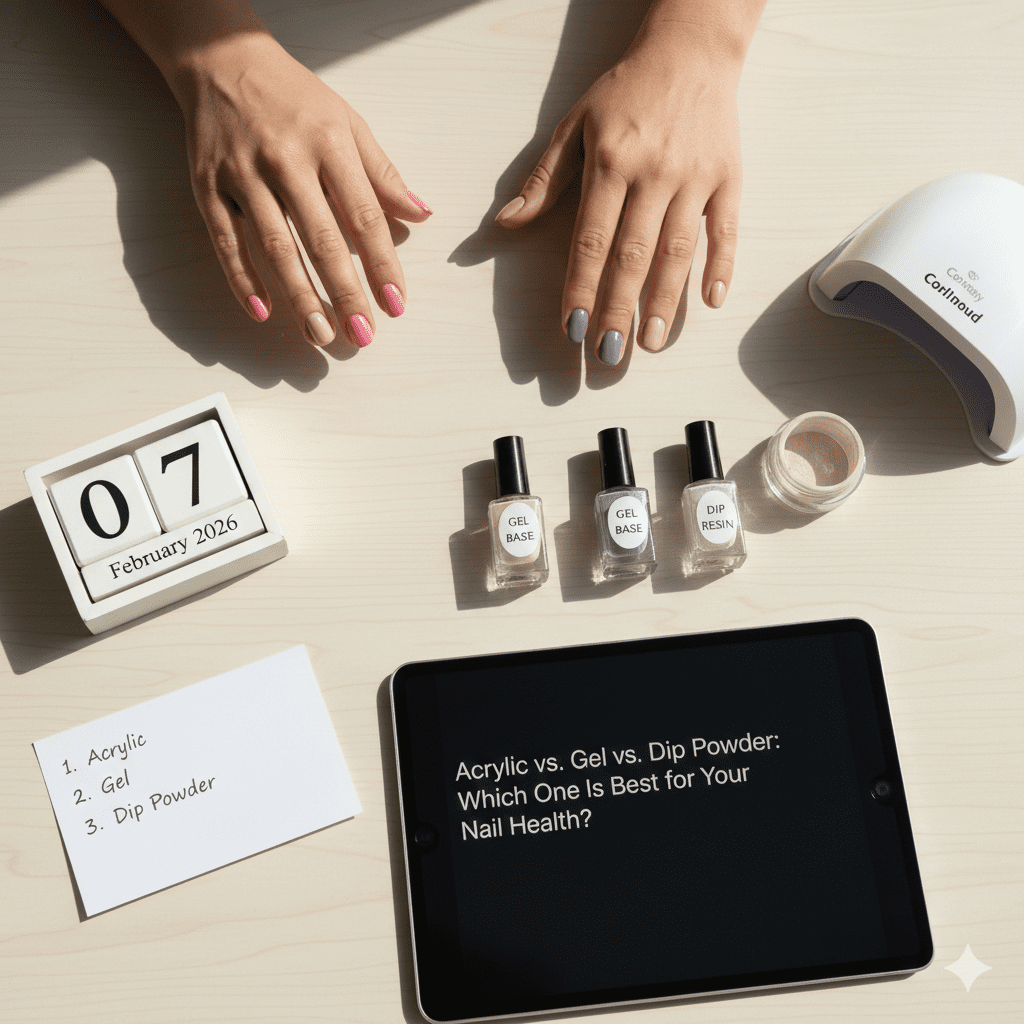

If you’ve ever removed a beautiful set of nails only to find thin, peeling, or sore nail beds underneath—you’re not alone.
Over the past 10 years, I’ve seen countless clients bounce between acrylic, gel, and dip powder nails, hoping one will finally stop the damage.
Here’s the truth most salons don’t explain clearly: the “best” nail system depends on your nail health, lifestyle, and maintenance habits—not trends.
Let’s break it down honestly, from a nail health perspective, so you can make the right choice for your nails.
Understanding Nail Health (Before Choosing Any Enhancement)
Your natural nails are made of keratin layers. When these layers are over-filed, dehydrated, or improperly removed, damage happens—regardless of the product used.
Healthy nails need:
- Minimal aggressive filing
- Proper removal (never force or peel)
- Balanced moisture (oil + hydration)
- Breaks between sets when needed
👉 No nail system is “damage-free” if applied or removed incorrectly.
Acrylic Nails: Strong, Durable, but High-Risk if Misused
What Are Acrylic Nails?
Acrylic nails are created by mixing liquid monomer with powder polymer, forming a hard protective layer over your natural nail.
Pros of Acrylic Nails
- Extremely strong and long-lasting
- Ideal for chronic nail biters
- Best for dramatic length and shape
- Holds up well to manual work
Cons for Nail Health
- Requires heavy filing during prep and removal
- Strong chemicals can dehydrate nails
- Improper removal causes thinning and pain
Best For:
- Clients with very weak, short, or bitten nails
- People who need long-lasting structure
- Those who commit to professional maintenance
⚠️ Health Tip: If your nail tech drills into your natural nail “to make it last longer,” that’s a red flag.
Gel Nails: Flexible, Natural-Looking, and Nail-Friendly (When Done Right)
What Are Gel Nails?
Gel nails use a light-cured formula that hardens under a UV or LED lamp. They sit more flexibly on the nail plate than acrylic.
Pros of Gel Nails
- More flexible and natural-looking
- Less aggressive filing than acrylic
- Lighter feel on the nail
- Easier soak-off when done properly
Cons for Nail Health
- Can peel if nails are thin
- Improper soaking leads to scraping damage
- Overexposure to UV without protection
Best For:
- Clients with relatively healthy nails
- Short to medium nail lengths
- People who prefer a natural finish
💡 Pro Insight: Gel is often blamed for damage—but 90% of the damage comes from peeling it off at home.
Dip Powder Nails: The “Middle Ground” Most People Misunderstand
What Is Dip Powder?
Dip powder nails involve applying resin (similar to glue) and dipping the nail into colored powder, creating a hardened layer without UV light.
Pros of Dip Powder Nails
- No UV/LED lamp required
- Stronger than gel, lighter than acrylic
- Long-lasting with minimal lifting
- Great for thin nails when applied gently
Cons for Nail Health
- Sanitation issues if powders are shared
- Can feel bulky if layered incorrectly
- Removal still requires soaking and patience
Best For:
- Clients wanting strength without long extensions
- Those avoiding UV exposure
- People with naturally thin nails
🚨 Salon Safety Note: Dip powder should NEVER be double-dipped into a communal jar.
Acrylic vs Gel vs Dip Powder Nails: Health Comparison Table (Explained)
Which Is Least Damaging to Natural Nails?
From my professional experience:
- Gel (best for nail health)
- Dip Powder (moderate risk)
- Acrylic (highest risk if overused)
But—and this is critical—application and removal matter more than the product itself.
Step-by-Step: How to Choose the Best Option for Your Nails
Step 1: Assess Your Natural Nail Condition
- Peeling or thin? → Gel or dip
- Extremely weak or bitten? → Acrylic (short-term)
- Healthy but break easily? → Dip powder
Step 2: Consider Your Lifestyle
- Hands in water often? → Dip or acrylic
- Office job, low impact? → Gel
- Gym, manual work? → Acrylic or dip
Step 3: Think Long-Term
- Want nail recovery? → Gel + breaks
- Want strength without length? → Dip powder
- Want dramatic nails? → Acrylic (responsibly)
Pro-Tip Section: Nail Health Secrets I Tell My Regular Clients
💅 Use cuticle oil daily (jojoba-based is best)
💅 Schedule removal, don’t rush it
💅 Never skip base protection layers
💅 Take a break every 2–3 months
💅 Ask your tech about nail prep—not just color
Your nails grow from the matrix. Damage today shows up weeks later.
Common Mistakes to Avoid (That Ruin Nail Health Fast)
- Peeling off gel or dip at home
- Over-filing the natural nail plate
- Skipping oil because nails “feel fine”
- Going longer instead of repairing damage
- Letting untrained techs use drills aggressively
🚫 If your nails burn during curing or removal, something is wrong.
Maintenance Tips to Keep Your Nails Healthy (No Matter the System)
Weekly Nail Care Routine
- Apply cuticle oil twice daily
- Use gloves for cleaning
- File only in one direction
- Avoid using nails as tools
Between Appointments
- Don’t “fix” lifting yourself
- Book fills instead of full removals
- Communicate discomfort immediately
So… Which One Is Truly Best for Your Nail Health?
Here’s my honest, experience-backed answer:
- Best overall for nail health: Gel
- Best balance of strength + health: Dip Powder
- Best for extreme nail issues: Acrylic (short-term only)
The healthiest nails I see belong to clients who:
✔ Choose the right system
✔ Maintain properly
✔ Respect removal timing
Final Thought: Strong Nails Are Built, Not Bought
Beautiful nails aren’t about following trends—they’re about understanding what your natural nails can handle. When you choose wisely and care consistently, your nails actually get stronger over time, not weaker.
✨ Now tell me—what’s your biggest nail struggle right now: breakage, peeling, or soreness after removal?