

If you’ve ever noticed your nails peeling, turning yellow, or your cuticles feeling irritated after regular polish use, you’re not imagining it.
After 10 years as a professional nail technician, I’ve seen many clients struggle with brittle nails and sensitivity — even when they “hardly ever” wore polish.
The biggest culprit? Harsh chemicals hiding in traditional nail polish.
That’s why non-toxic, 10-free and vegan nail polish has become more than a trend — it’s a necessity for nail health.
What Does “10-Free” Nail Polish Actually Mean?
A 10-free formula eliminates ten of the most harmful and controversial chemicals commonly found in nail polish.
The Chemicals 10-Free Polishes Avoid
Most 10-free brands exclude:
- Formaldehyde
- Formaldehyde resin
- Toluene
- Dibutyl phthalate (DBP)
- Camphor
- Xylene
- Ethyl tosylamide
- Triphenyl phosphate (TPHP)
- Parabens
- Fragrance (synthetic)
From a technician’s standpoint, this matters because these ingredients are linked to nail thinning, allergic reactions, and long-term nail damage.
Why Vegan Nail Polish Matters (Even If You’re Not Vegan)
Vegan nail polish means no animal-derived ingredients and no animal testing.
What most people don’t realize is that some traditional polishes contain:
- Crushed beetles (for red pigment)
- Guanine (fish scales for shimmer)
Switching to vegan formulas protects animals and reduces skin reactions — especially for sensitive clients I work with regularly.
How I Evaluate Non-Toxic Nail Polish as a Professional
Before recommending any brand to clients, I test for:
- Wear time (minimum 5 days without chipping)
- Brush quality (wide, rounded brushes apply smoother)
- Opacity (fewer coats = healthier nails)
- Removal ease (harsh scrubbing damages nails)
The following brands passed all four tests.
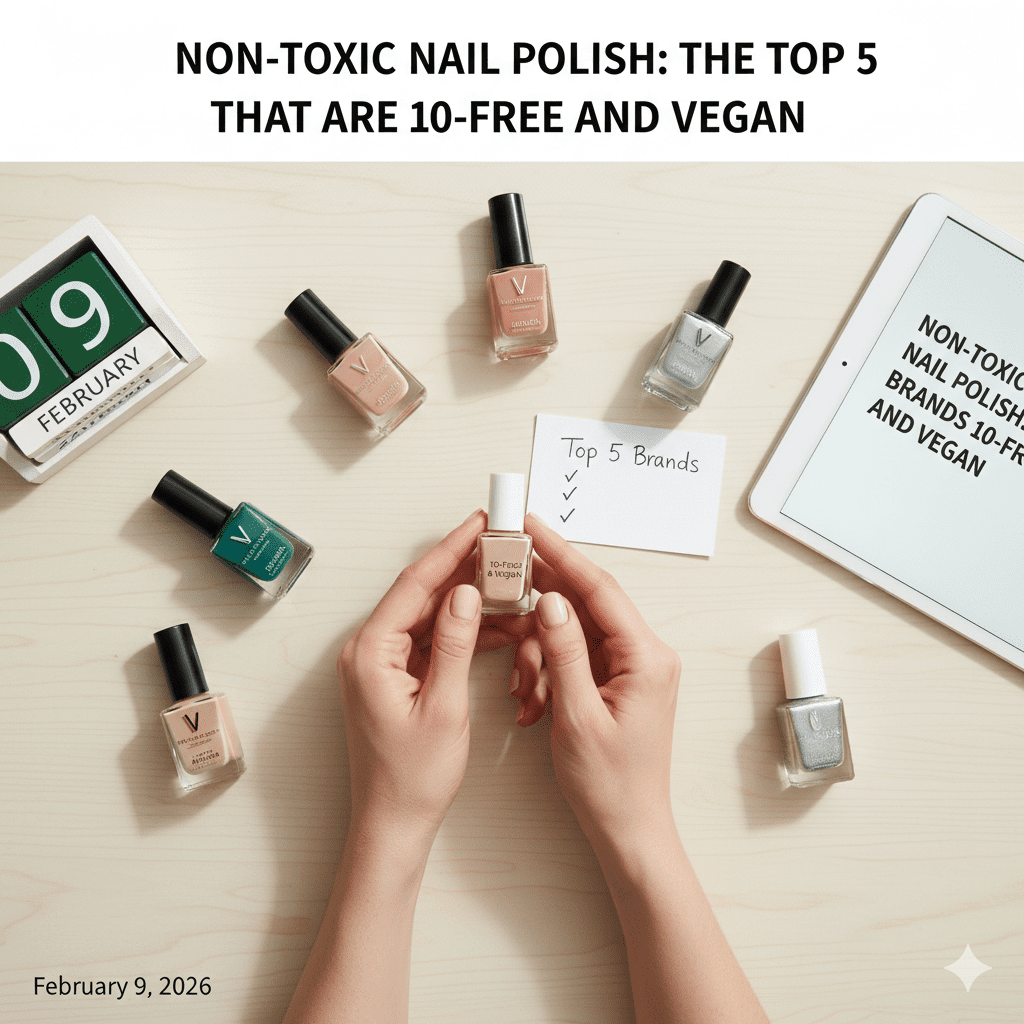
The Top 5 10-Free and Vegan Nail Polish Brands
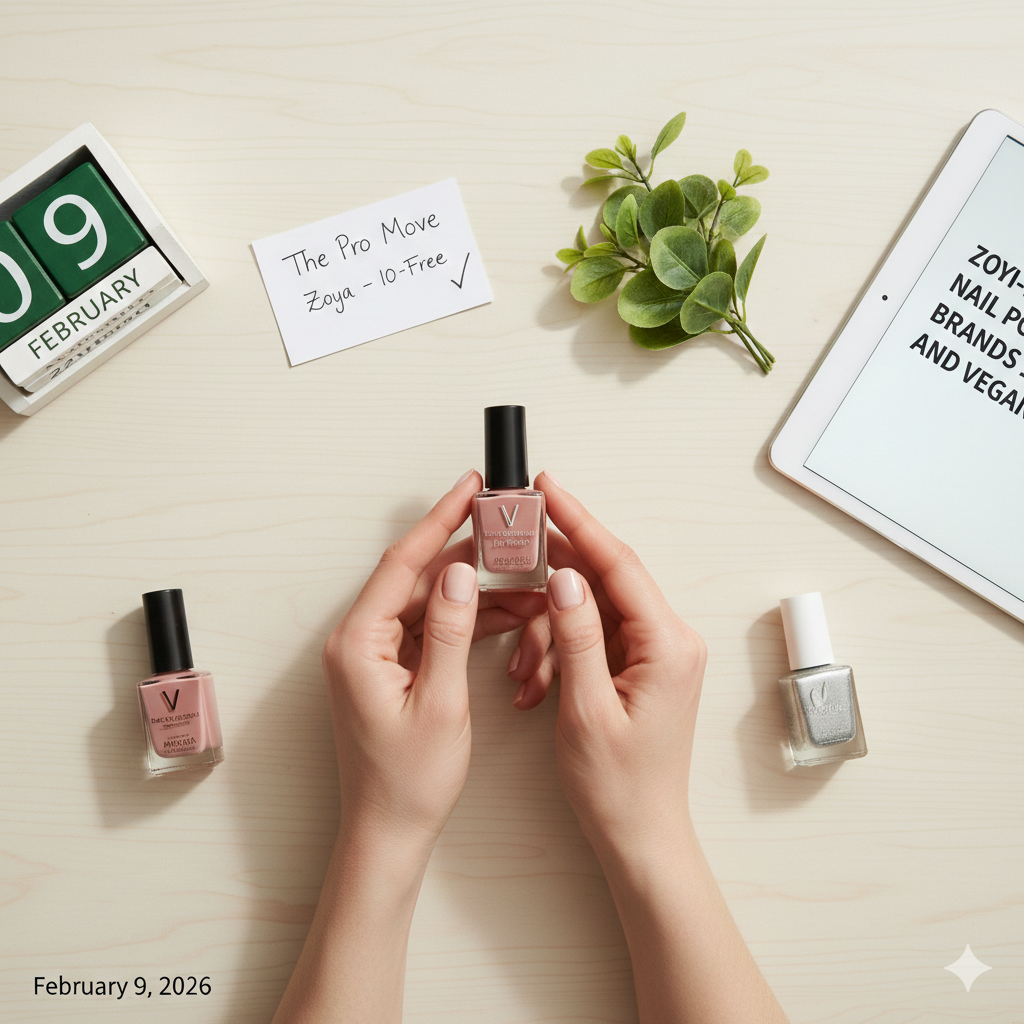
1. Zoya – Best Overall for Nail Health
Zoya is often the first brand I recommend to clients transitioning to non-toxic polish.
Why it stands out:
- Over 400 shades
- Smooth, self-leveling formula
- Excellent for weak or peeling nails
Pro Insight:
Zoya’s polish remover is also gentler than most drugstore options — a rare bonus.
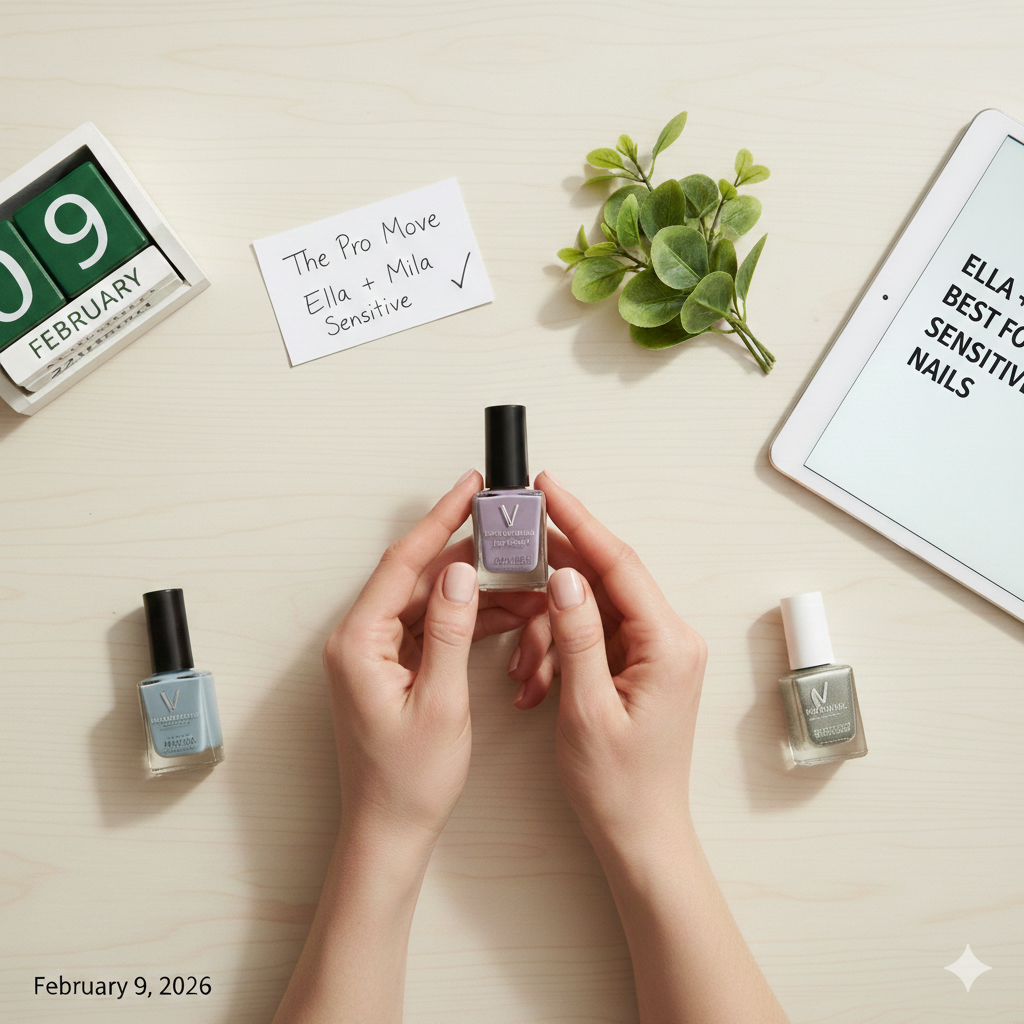
2. Ella + Mila – Best for Sensitive Nails
This brand was created specifically for people with allergies and nail damage.
What I love as a tech:
- Quick-drying
- Minimal odor
- Great pastel and neutral range
Clients with eczema or contact dermatitis tolerate this brand exceptionally well.
3. Butter London – Best Salon-Like Finish
If you want high-gloss, salon-style results without toxins, Butter London delivers.
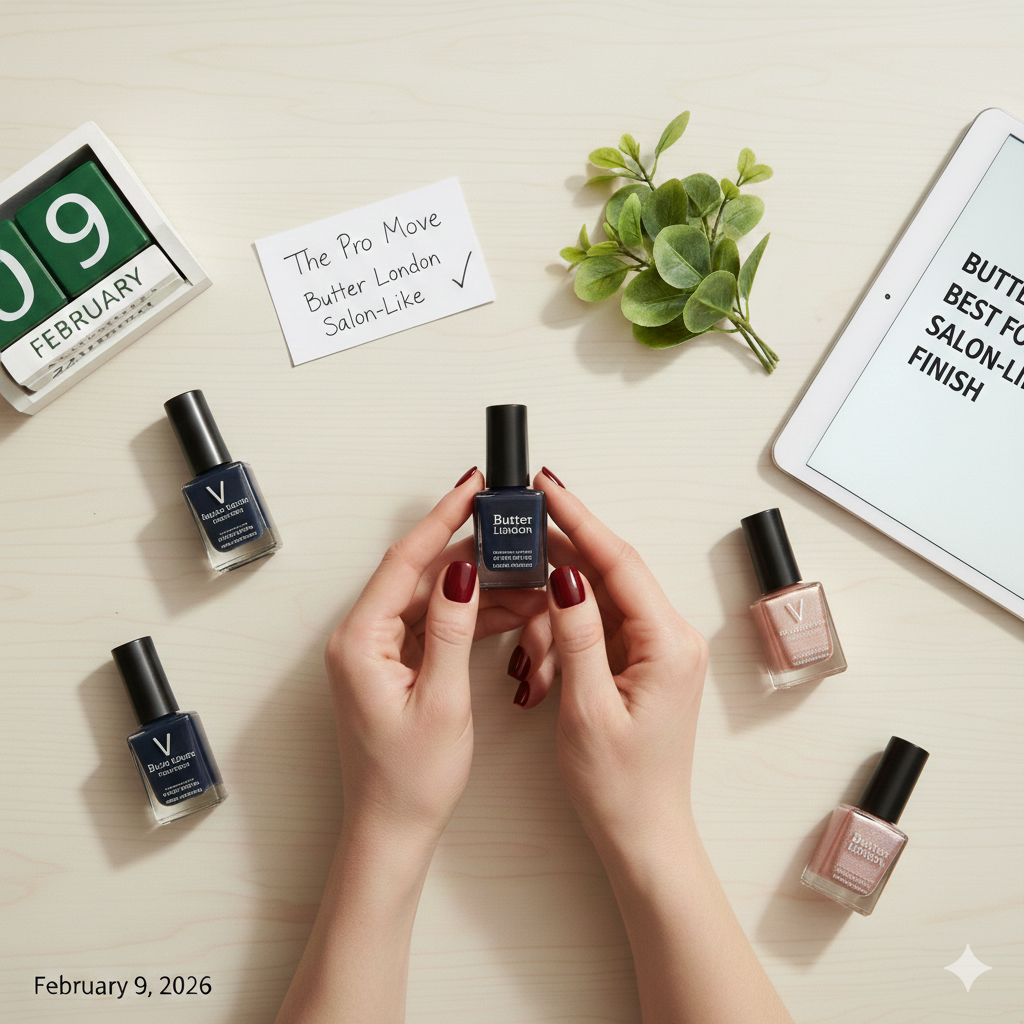
Why professionals trust it:
- Gel-like shine (without UV lamps)
- Strong pigmentation
- Excellent brush control
It’s my go-to for special occasions when clients want drama without damage.
4. Pacifica – Best Budget-Friendly Option
Pacifica proves non-toxic doesn’t have to mean expensive.
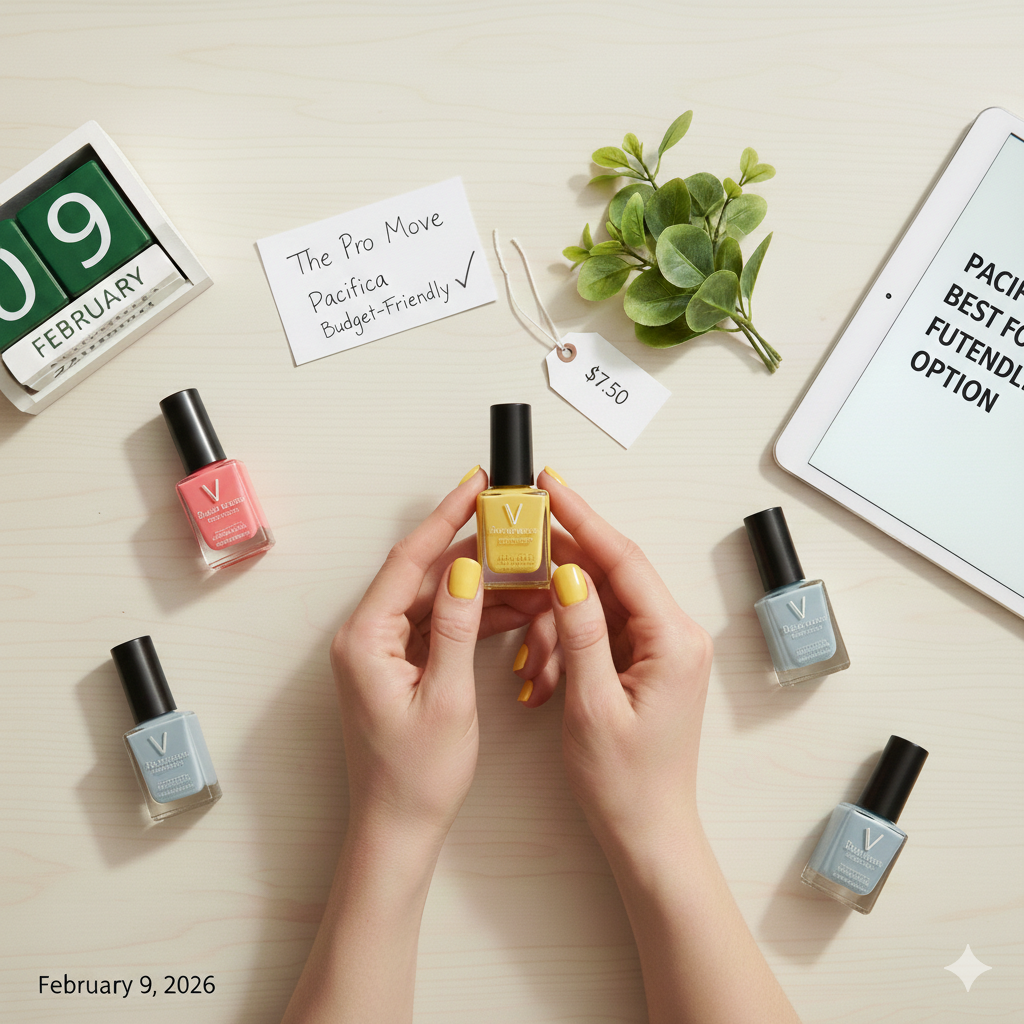
Best features:
- Affordable pricing
- Widely available
- Plant-based, breathable formulas
Real talk: Wear time is slightly shorter, but nail health improves noticeably.
5. OPI Nature Strong – Best Mainstream Transition Brand
For clients hesitant to leave traditional brands, this is the easiest switch.
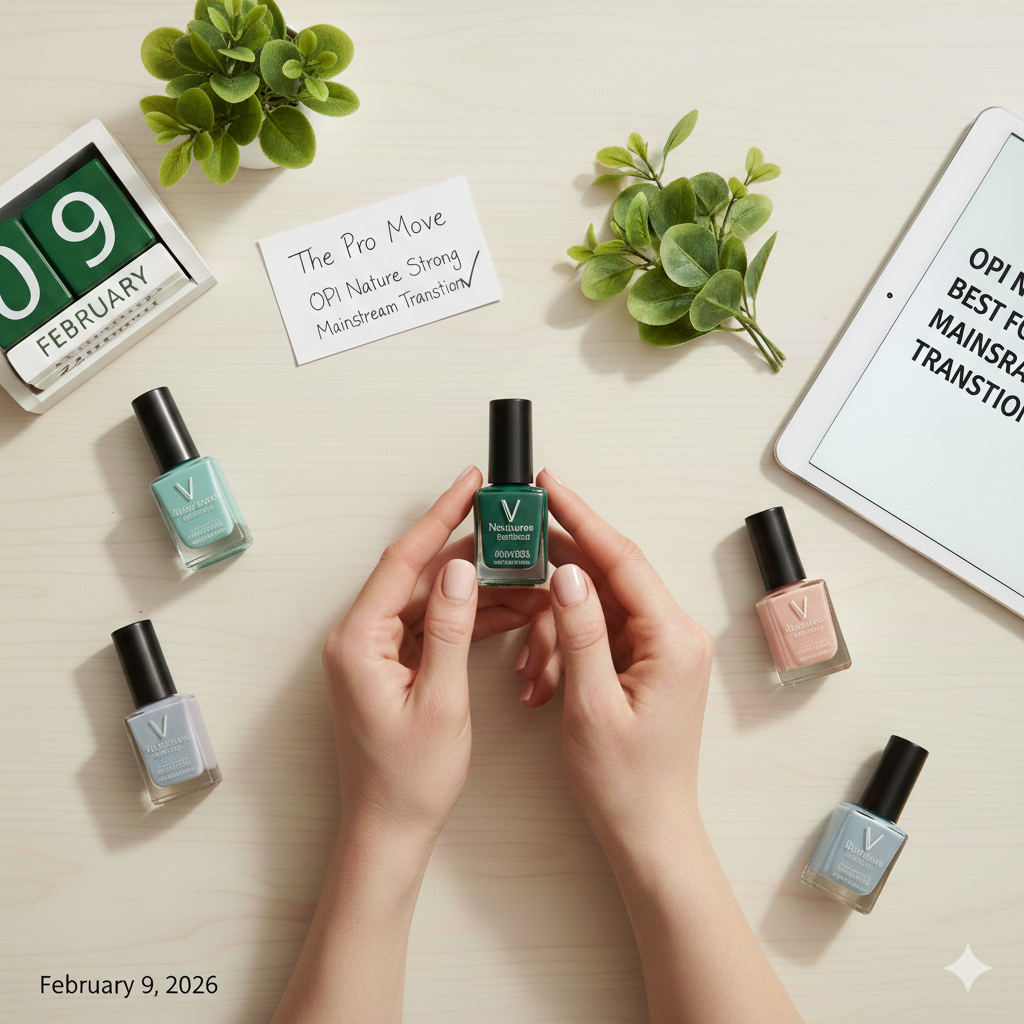
Why it works:
- Familiar OPI brush and bottle
- Plant-based, vegan formula
- Strong color payoff
It bridges the gap between conventional and clean beauty beautifully.
Pro-Tips for Using Non-Toxic Nail Polish (From the Salon)
Pro Tip #1: Always Use a Compatible Base Coat
Many 10-free polishes are water-based or breathable.
- Using a traditional base coat can reduce adhesion
- Stick with the same brand’s system when possible
Pro Tip #2: Thin Layers Matter More Than Ever
Non-toxic polish performs best in 2–3 ultra-thin coats.
Thick layers cause dragging and early chipping — something I see often with DIY users.
Step-by-Step: How to Make 10-Free Polish Last Longer
Step 1: Clean the Nail Plate Properly
- Use alcohol or gentle remover
- No oils, lotions, or residue
Step 2: Lightly Buff (Optional but Effective)
- Use a fine-grit buffer
- One or two passes only
This gives clean polish something to grip.
Step 3: Apply Base Coat Correctly
- Start slightly away from the cuticle
- Push, then pull down
This creates cleaner lines and prevents flooding.
Step 4: Seal the Free Edge
- Lightly swipe polish across the nail tip
- Repeat with top coat
This professional trick alone can add 2 extra days of wear.
Common Mistakes to Avoid with Non-Toxic Nail Polish
Many people think clean polish “doesn’t work” — but it’s usually technique.
Avoid these mistakes:
- Skipping base coat
- Applying thick coats
- Using oily cuticle remover before painting
- Mixing brands randomly
- Expecting gel-level wear without maintenance
Non-toxic polish requires skill, not shortcuts.
Is Non-Toxic Nail Polish Worth It?
From a professional standpoint — absolutely.
Clients who switch notice:
- Less peeling
- Stronger nail growth
- Reduced discoloration
- Fewer allergic reactions
Healthy nails hold polish better — regardless of brand.
Final Thought From a Nail Technician
Non-toxic, 10-free and vegan nail polish isn’t about perfection — it’s about protection.
When you treat your nails like skin instead of plastic, they respond with strength, shine, and longevity.
💬 Have you tried any non-toxic nail polish brands yet — or are you nervous about making the switch?